20 Essential Items You Should Have In Your Emergency Preparedness Kit
 We all know we should be prepared for natural disasters but somehow we never get around to really making our own emergency preparedness kit. Or we assume we have everything we need and don’t even consider doing a quick checklist. As a Miami resident, my family has had its fair share of hurricane warnings, flooding and tropical storms. I also grew up in Chile, where earthquakes are totally normal and schools not only teach fire drills but also explain how to keep safe when the earth literally starts moving.
You would think that by now I would be prepared at all times. However, it’s time to redo my emergency kit. It’s not enough to have water, flashlights, batteries and cell phone chargers. I learned this the hard way years ago when Katrina and Wilma brought so much devastation. My youngest was a few weeks old at the time and we weren’t prepared for the hurricane’s aftermath. We had the basics but quickly began to run out of supplies. I was never happier to have been nursing!
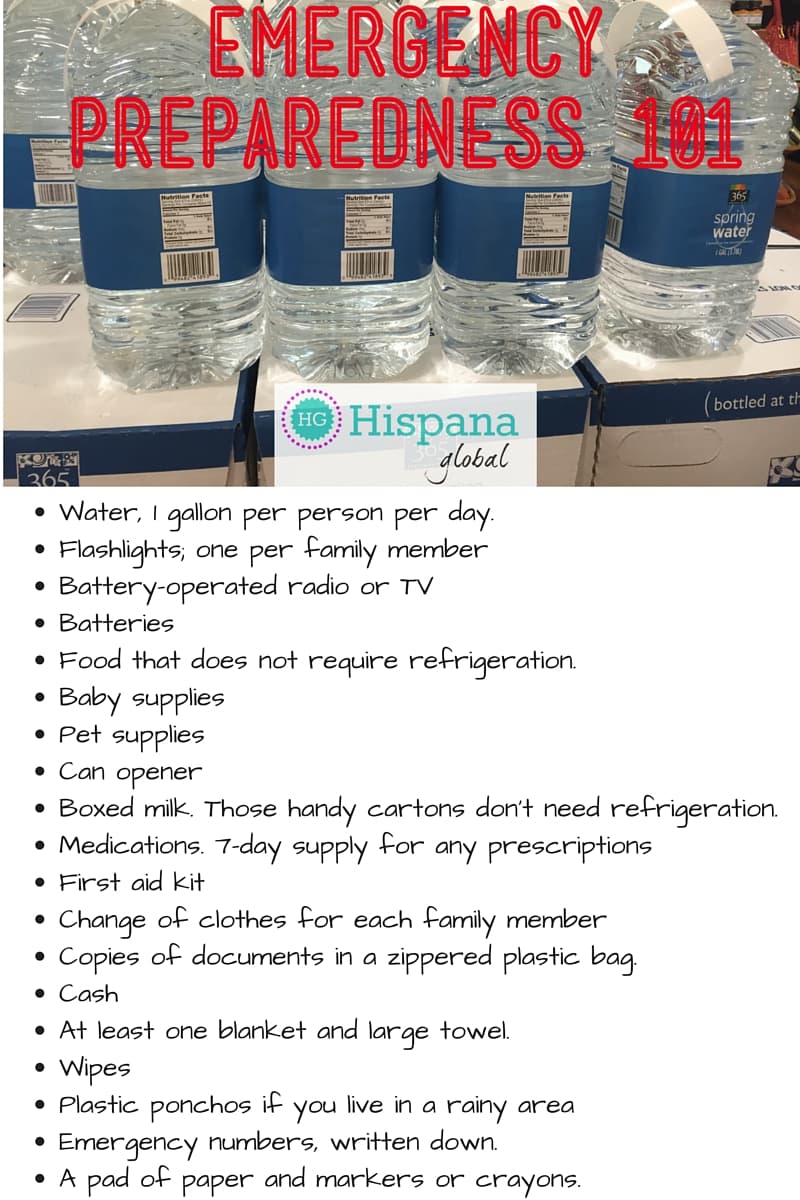
20 emergency preparedness kit essentials
In case you are an emergency kit newbie (nothing wrong with that!), here’s what I suggest you include:
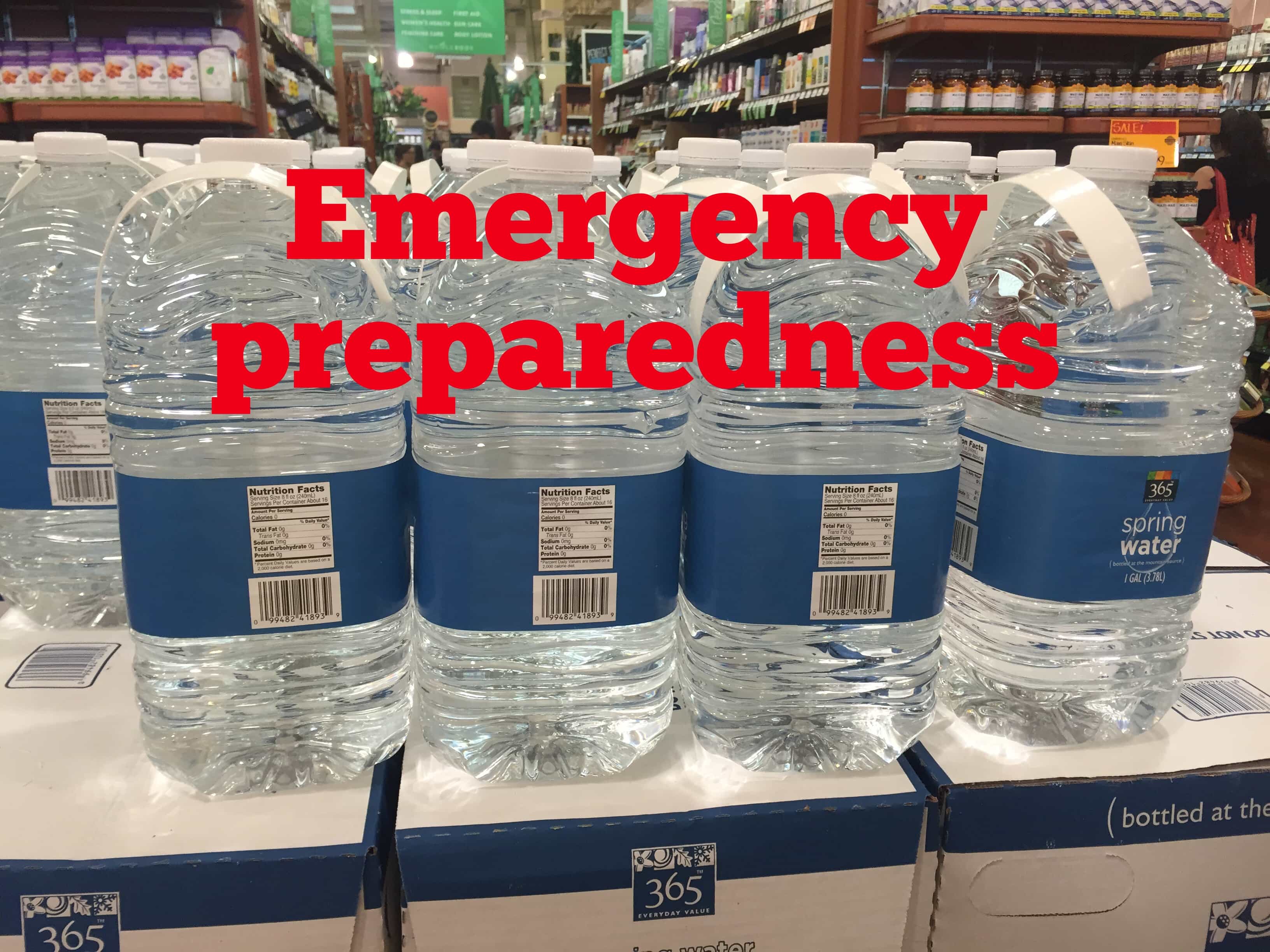
- Water. When estimating how much you need, take into consideration all family members and pets. The Red Cross recommends one gallon per person per day. Also consider a water purifying kit.
- Flashlights. Have one for each family member.
- Battery-operated radio or TV.
- Batteries. Have enough for flashlights, a radio and any other devices you may need to power up. Tip: have extra cell phone chargers, batteries or power banks.
- Baby supplies, including diapers, diaper rash cream, wipes, baby food, bottles and formula (if needed).
- Pet supplies.
- Food that does not require refrigeration. Canned goods, crackers, cookies, tuna packs, dried fruit and fruit cups are great options. Plan for at least a 3-day supply. Don’t forget pets if you have them!
- Can opener. Sounds obvious but after my first hurricane I realized the only can opener I had was electric and I had no electricity… Yep, it was useless.
- Boxed milk. Those handy cartons don’t need refrigeration. I prefer the individual boxes for the kids. Even if they are more expensive, there’s less waste because you don’t have to throw away leftovers.
- Medications. Consider not only a 7 day supply for any prescriptions, but also regular over the counter medications you and your family members might need.
- First aid kit that includes at the very least bandages, splints, antibiotic ointment, tweezers, antiseptic wash and analgesics such as ibuprofen or acetaminophen.
- Change of clothes for each family member.
- Copies of important documents such as passports, birth certificates, insurance cards, homeowners insurance, and your deed or lease documents. Store them in a zippered plastic bag.
- Cash. We’re used to using our debit and credit cards but during natural disasters, stores might not be able to process them.
- At least one blanket and large towel. I recommend one per person.
- Wipes. If you have kids, you know how versatile they are.
- Ponchos if you live in a rainy area. In South Florida they’re a necessity.
- Emergency numbers. Have them on a piece of paper and not just on your phone. If your phone dies, you won’t be able to access your contacts.
- A pad of paper and markers or crayons. They can come in very handy to distract kids, even if it’s to play tic tac toe or hangman.
- Multi-purpose tool.
It’s always better to be safe than sorry. Even if it sounds scary to be thinking of a worst-case scenario, it gives you a tremendous peace of mind. Do you have anything else you suggest including in an emergency preparedness kit?